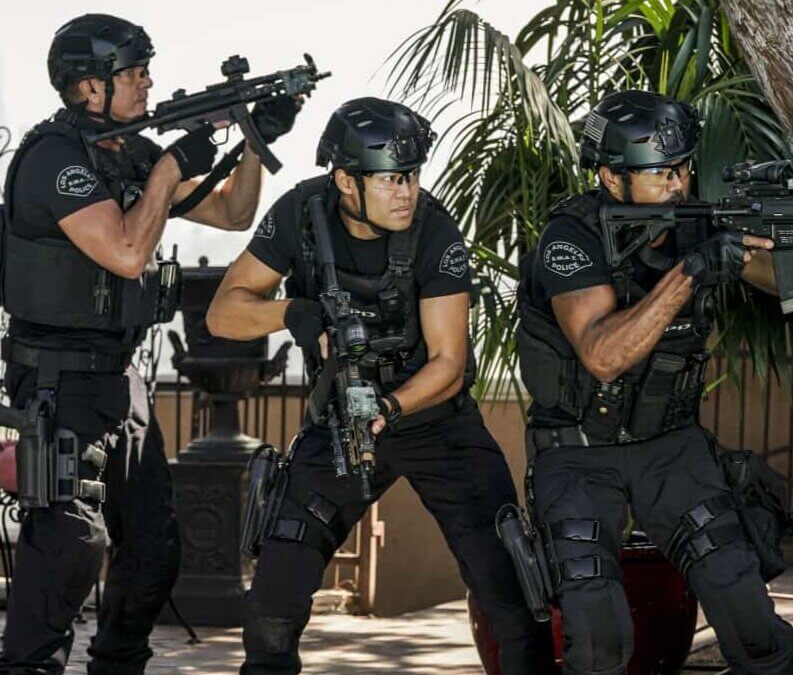
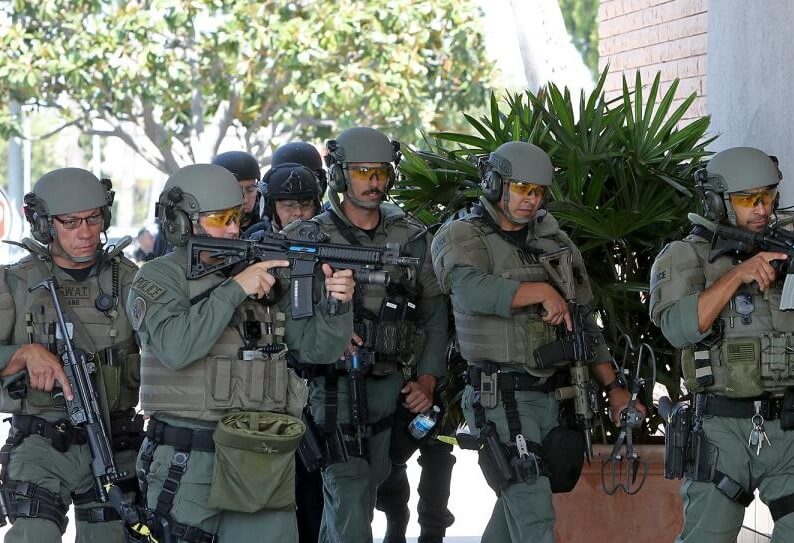
When most people think about police work, they picture patrol cars, traffic stops, detectives, and officers answering calls around town. But sometimes a situation becomes far more dangerous than a normal patrol response. That’s where police SWAT teams come in.
Across the West Coast, specialized tactical officers may be called when police departments face barricaded suspects, hostage situations, armed suspects, high-risk warrants, or other incidents beyond the capabilities of ordinary patrol resources. The Los Angeles Police Department says its SWAT team responds to barricaded suspects, snipers, and other high-risk incidents requiring specialized expertise. LAPD also reports that its SWAT personnel have rescued dozens of hostages. (LAPD Online)
And here’s the part that doesn’t always make the movies: SWAT work is primarily about protecting life, controlling chaos, and making difficult decisions under pressure—not looking cool in tactical gear.
When a Routine Call Goes Sideways
Police officers rarely know exactly what they’re walking into.
A call can begin as a disturbance, welfare check, domestic incident, or report of a suspicious person. Then information changes. A weapon is reported. Someone refuses to come outside. A hostage may be involved.
Suddenly, patrol officers need specialized assistance.
That is one reason departments maintain tactical teams. LAPD describes SWAT deployment as appropriate when circumstances are beyond normal warrant-service capabilities, when locations are heavily fortified, weapons have been used or are present, or other high-risk factors exist. (LAPD Online)
For officers, that transition from routine police work to a critical incident can happen incredibly quickly.
Los Angeles: A Nationally Known SWAT Tradition
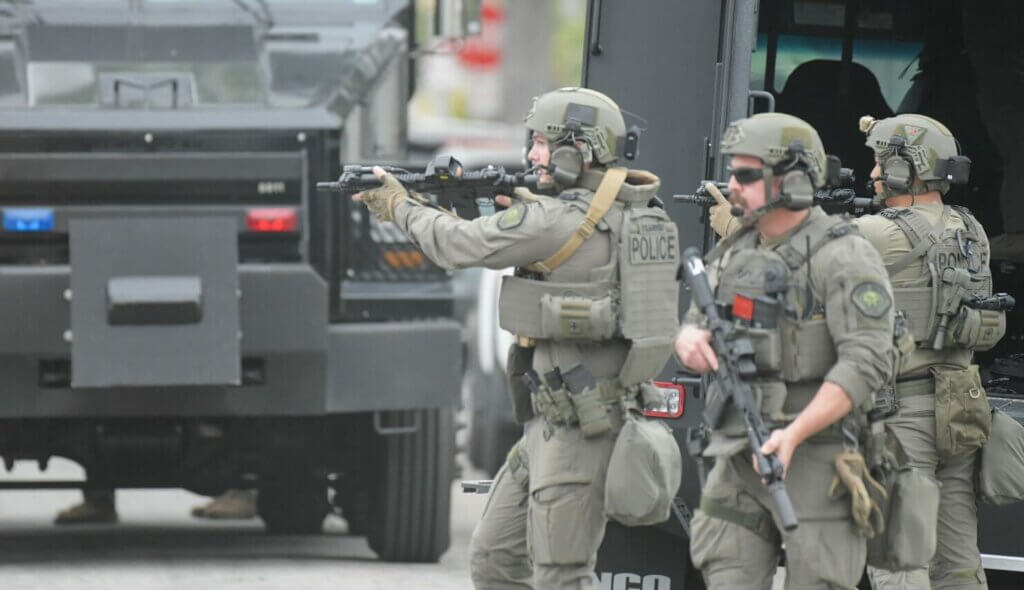
The LAPD SWAT team is one of the best-known tactical units in American law enforcement. Its Metropolitan Division provides 24-hour SWAT coverage for incidents including barricaded suspects, snipers, and other high-risk situations. (LAPD Online)
LAPD‘s tactical history has helped shape modern American SWAT operations, but the mission remains fundamentally about public safety.
The department also hosts its annual SWAT Round Up, an event that brings tactical teams together for training and competition. (LAPD Online)
That emphasis on training matters because tactical policing isn’t something officers simply improvise.
Training Is the Real Heavy Lifting
The television version of SWAT usually involves a dramatic soundtrack and somebody yelling, “GO!”
Real police training is considerably less entertaining—and much more important.
Departments emphasize communications, decision-making, firearms proficiency, defensive tactics, de-escalation, medical response, and scenario-based training.
San Diego Police Department’s publicly available training information, for example, lists tactical communications, use of force, defensive tactics, de-escalation, first aid/CPR, firearms, mental-health topics, and other subjects in its advanced officer training. (San Diego)
Portland Police Bureau similarly describes extensive academy, advanced academy, field training, and continuing in-service training designed to help officers safely and effectively perform their duties. (Portland Oregon)
The lesson is pretty simple:
Preparation beats improvisation.
San Diego and the Southern California Challenge
San Diego’s geography creates its own law-enforcement challenges. The department serves more than 372 square miles and has more than 1,800 sworn personnel, according to current department information. SDPD also identifies SWAT/SRT as one of its specialized assignments. (San Diego)
Large metropolitan areas can produce a wide range of high-risk situations.
A tactical team may be asked to support patrol officers, detectives, or other units during an incident where specialized resources are needed.
And the goal isn’t simply to arrest someone.
Ideally, everyone goes home.
Portland’s SERT Mission
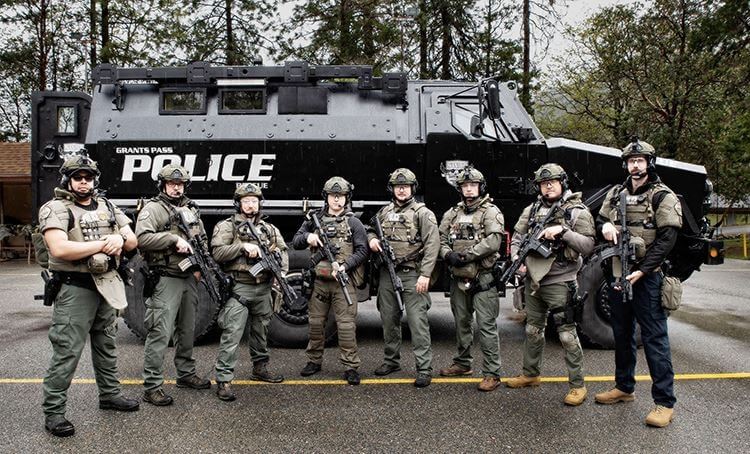
Up north, the Portland Police Bureau’s Special Emergency Reaction Team, or SERT, performs a similar critical-incident role.
Portland officially describes SERT’s mission as the preservation of life and property during critical incidents and high-risk operations. (Portland Oregon)
That wording is worth remembering.
SWAT isn’t simply about tactical equipment.
It is about solving dangerous situations while minimizing unnecessary risk.
Technology Has Changed Tactical Policing
Modern police tactical operations can involve considerably more technology than people realize.
Depending on department policies and circumstances, specialized law-enforcement units may have access to armored vehicles, robotics, unmanned systems, advanced communications, cameras, mapping technology, and other specialized equipment.
California departments face additional public oversight requirements concerning certain equipment. San Diego’s public information on California Assembly Bill 481 explains that agencies must maintain policies governing qualifying military equipment, publish annual reports, and provide information about its use and costs. (San Diego)
That transparency is increasingly part of modern law enforcement.
The Human Factor Still Matters Most
Technology can provide information.
Armor can provide protection.
Communications equipment can connect teams.
But none of those things replaces judgment.
SWAT officers have to process rapidly changing information while considering the safety of suspects, hostages, fellow officers, neighbors, and the broader public.
That requires discipline.
It requires communication.
And it requires knowing when patience may be safer than speed.
The West Coast Isn’t Hollywood
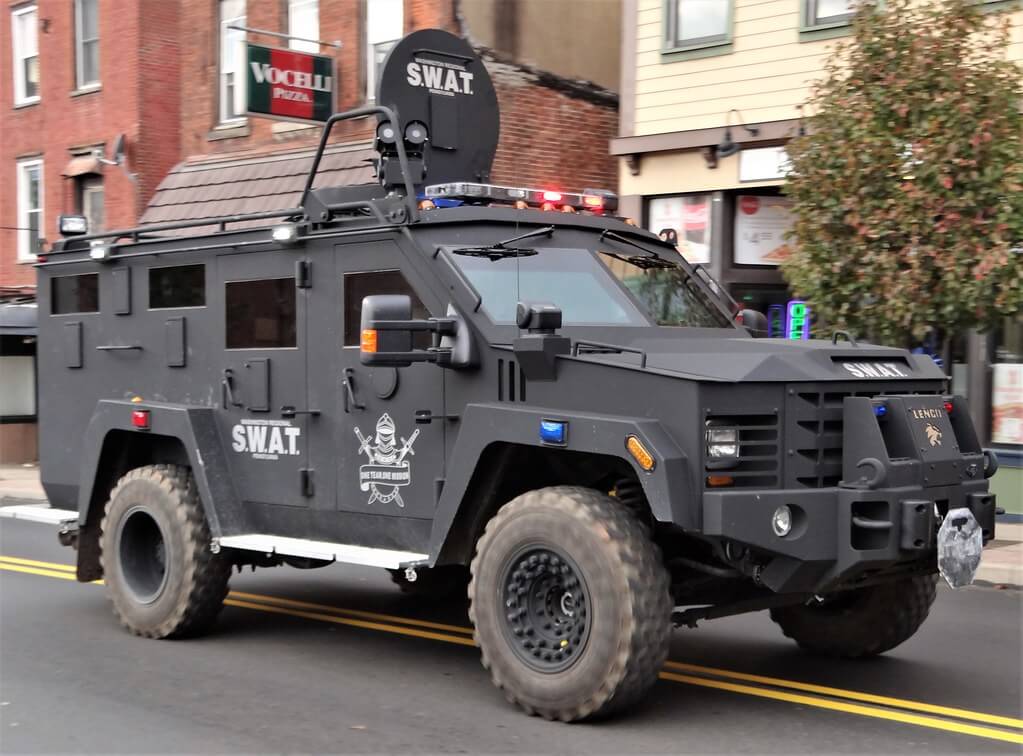
There is a temptation to associate SWAT with action movies.
Real tactical policing is much more complicated.
There can be long periods of waiting, negotiations, planning, reassessment, coordination, and communication before an operation reaches its most visible moment.
The public may see the tactical vehicles.
They may see officers in protective equipment.
Or see news helicopters overhead.
What they don’t necessarily see is the preparation behind the scenes.
And that’s often where the real work happens.
Respect the Badge—and the Training
The men and women serving in police SWAT teams accept assignments that can expose them to significant danger. Their work requires specialized training, physical preparation, teamwork, discipline, and constant attention to public safety.
That’s worth remembering the next time a tactical operation appears on the evening news.
It isn’t a movie set.
There are real officers involved.
Real families waiting at home.
And real people in the community who need the situation resolved safely.
10-4 Gear: Honor the Law Enforcement Profession

For officers, veterans, families, collectors, and supporters, 10-4 Gear offers law-enforcement products designed around police tradition and service. The store currently features police challenge coins, apparel, decals, drinkware, gifts, and other law-enforcement merchandise.
10-4 Gear Police Challenge Coins — Explore police, SWAT, K9, Thin Blue Line, memorial, prayer, and other law-enforcement challenge coins.
Police & Law Enforcement Shirts — 10-4 Gear carries police officer, sheriff, trooper, K9, tactical, and law-enforcement-themed apparel.
Or Police Decals & Accessories — The store also offers decals, drinkware, gifts, and other police accessories.
Explore Military and First-Responder Heritage
Readers interested in other service communities can also visit:
Military Outfitters — Military apparel, challenge coins, collectibles, and veteran products.
Vision Strike Coin — Military challenge coins and service-inspired collectibles.
Fire & Axes — Firefighter challenge coins, shirts, decals, drinkware, and other fire-service products.
When the Call Comes
A police SWAT operation may be one of the most demanding assignments in law enforcement.
But the objective isn’t complicated.
Protect people.
Preserve life.
Resolve the crisis.
And get everyone home whenever possible.
From Los Angeles to San Diego and Portland, West Coast law enforcement agencies rely on specialized teams because certain situations demand specialized training.
The next time you hear the term SWAT operation, remember that behind the equipment and headlines are police professionals who have spent countless hours preparing for the moments when ordinary police work isn’t enough.
Stay alert, Professional, Stay 10-4.